Rethinking the eSIM States
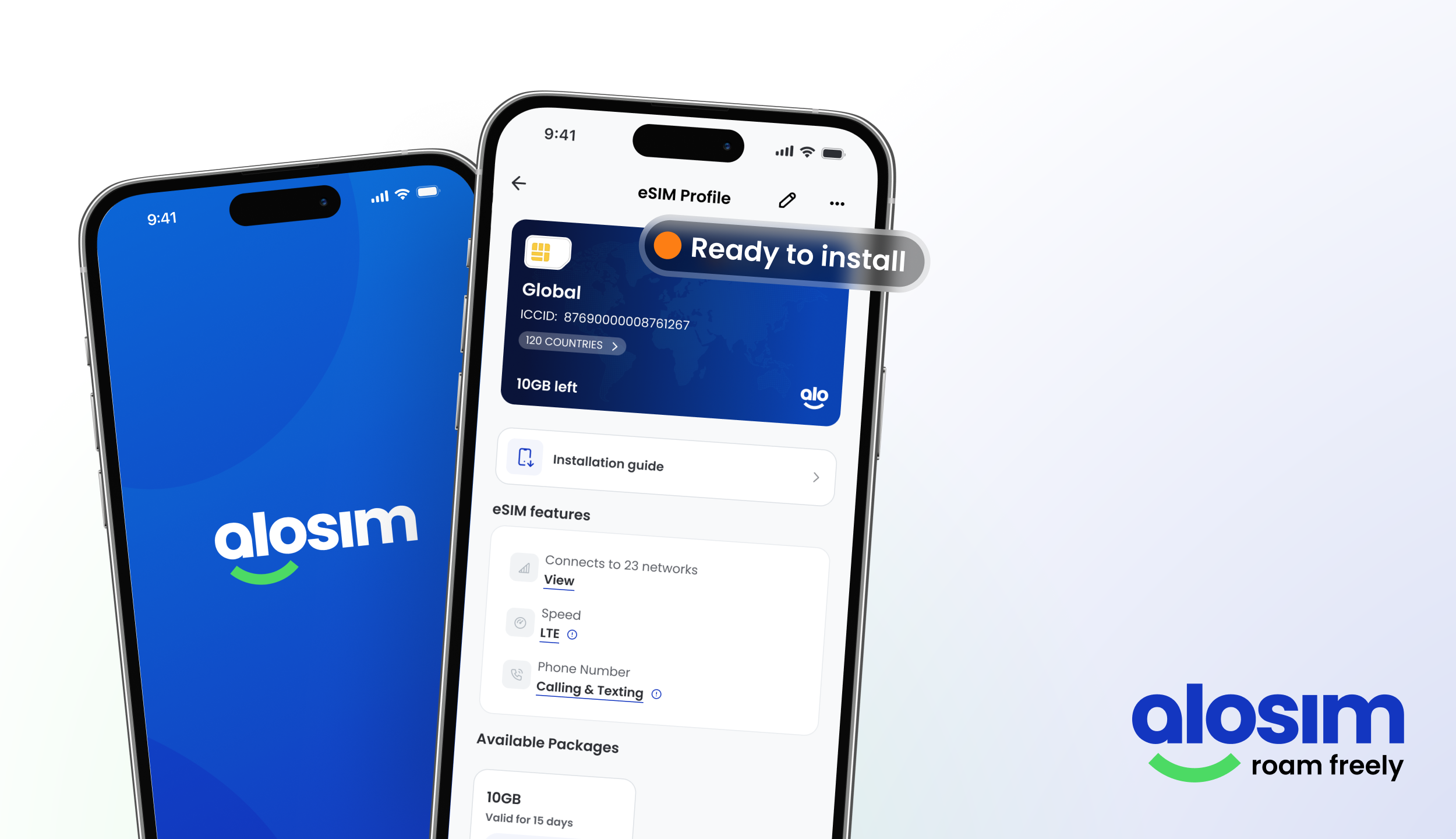
What is aloSIM?
aloSIM is a global eSIM provider — travellers buy data plans for 200+ countries straight from the app, no SIM swap. As UX/UI Designer, I owned the redesign of the entire eSIM lifecycle, from purchase to connected abroad.
What was the problem?
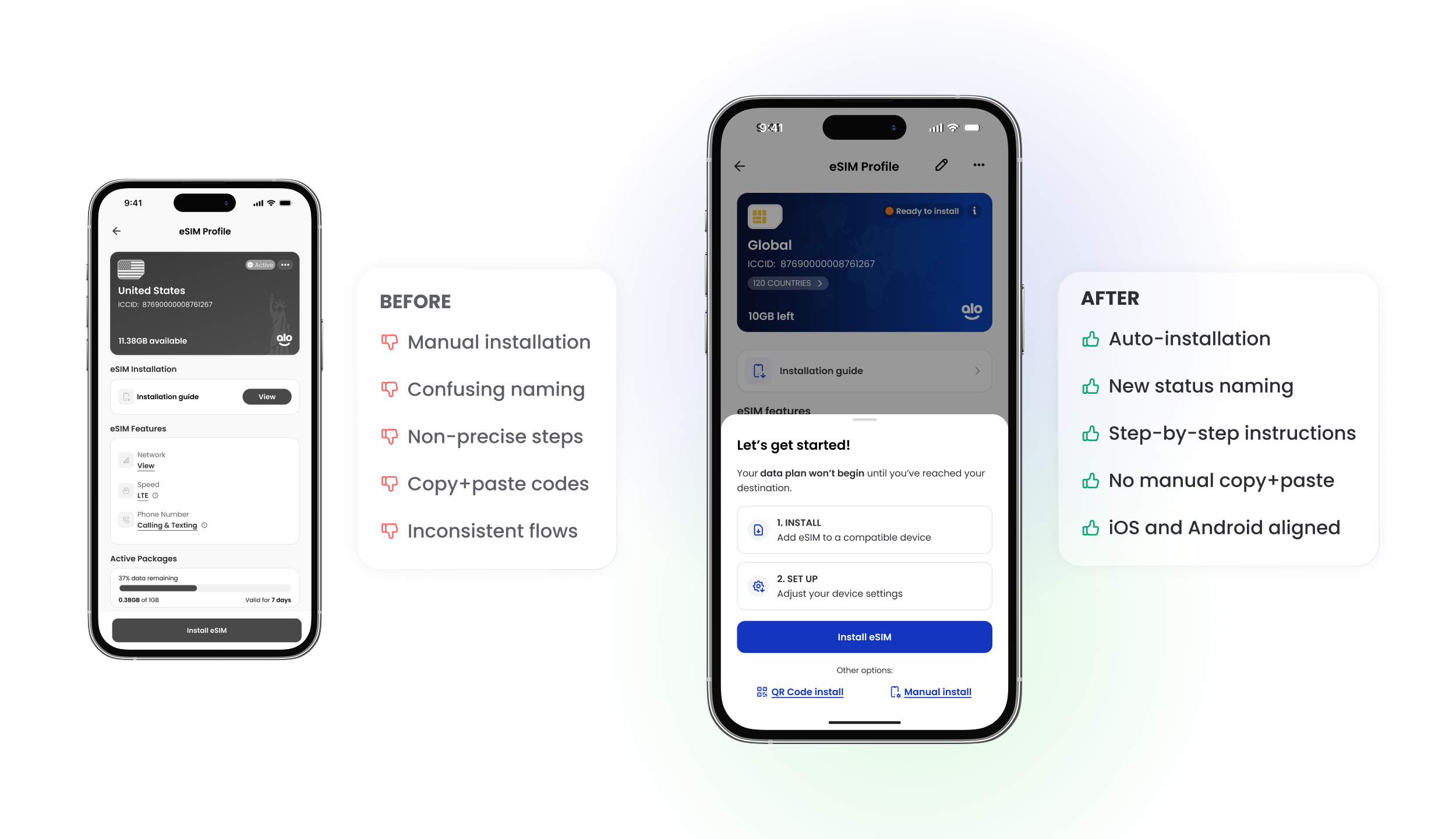
CS tickets all pointed to the same root issue: users didn't understand what was happening with their eSIM at any step. Status names like "Active" and "Not Active" didn't match what users were experiencing, the install guide was overwhelming, and people kept getting lost between aloSIM and phone settings.
How did I approach it?
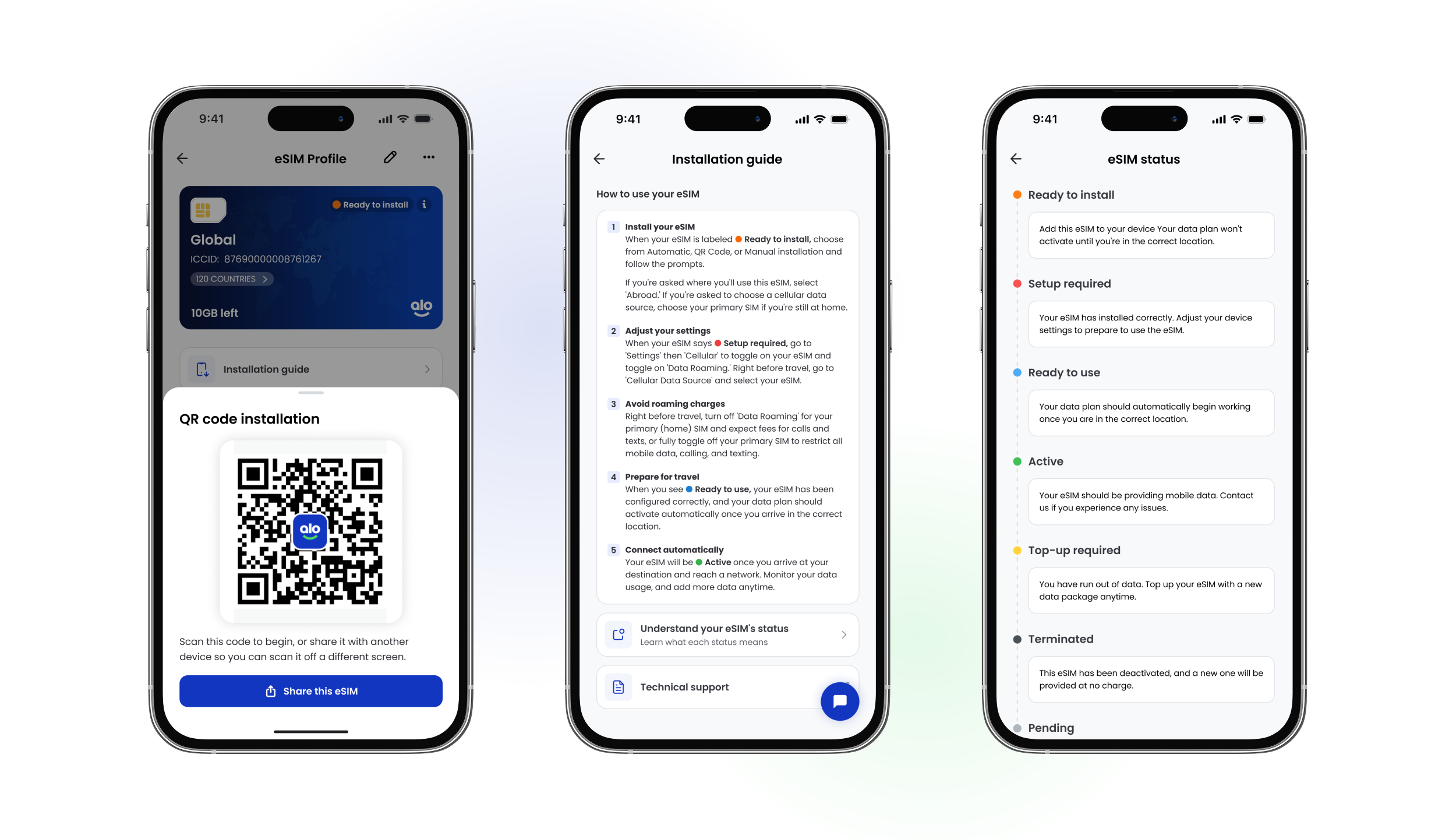
I mapped the 7-step journey with CS, pulled real quotes from tickets, and anchored the work in two personas — one app-fluent and fast, one instruction-led. From there I rebuilt the status system around what users need to do next, not the technical state: Pending → Ready to install → Ready to enable → Ready to travel → Active → Top-up required → Deactivated. The install guide became progressively disclosed, and I added contextual prompts for the moment users return from phone settings.
What was the outcome?
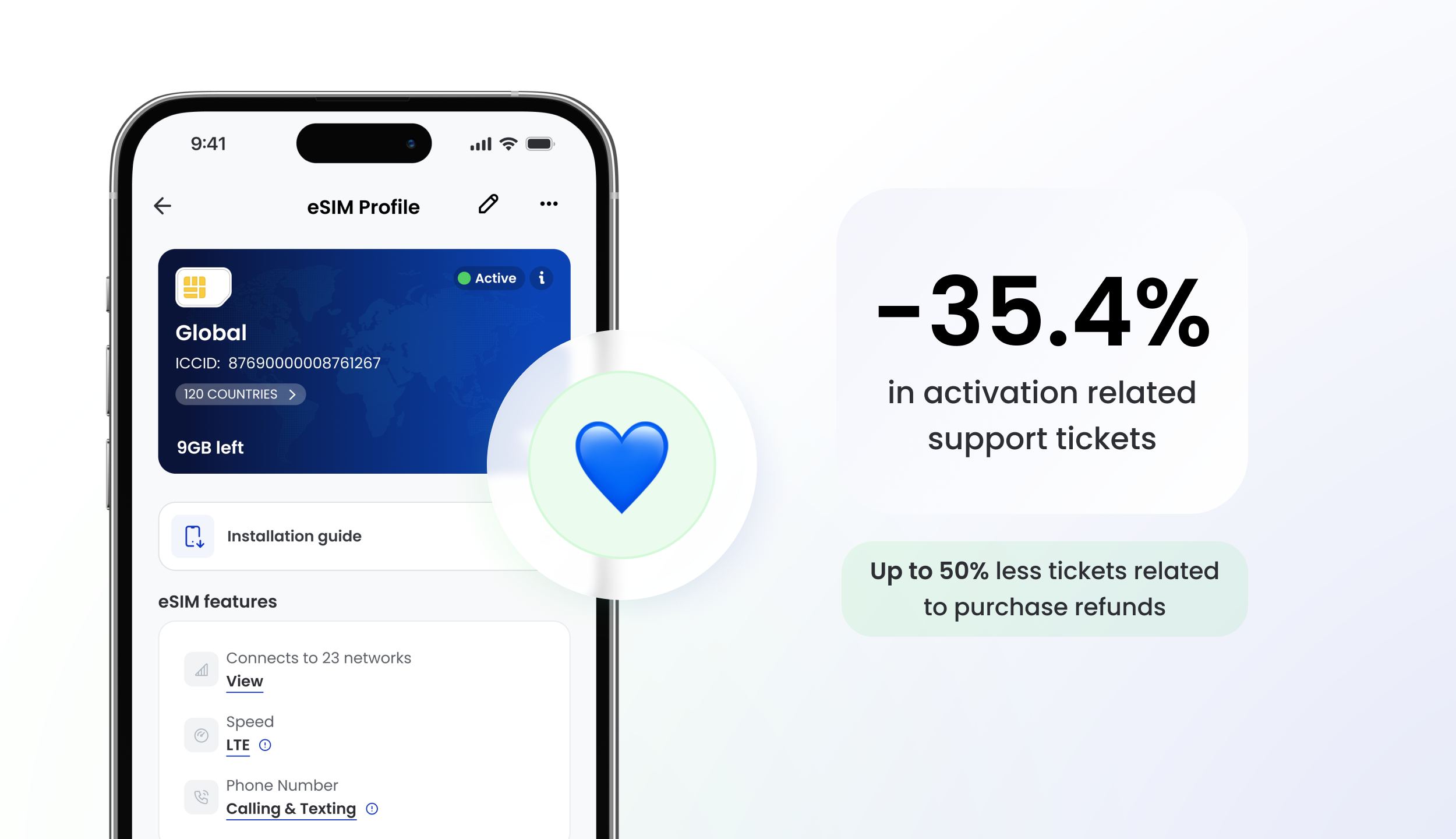
Shipped on iOS and Android in Q1 2026. iOS rolled out first — 40% of daily users, 70% of weekly revenue — to give us the strongest learning signal before extending the experience across platforms. The biggest unlock so far is internal: designers, developers, and CS now share one vocabulary for eSIM states.
Lesson: when a system feels confusing, the fastest fix is rarely UI polish — it's interrogating the language behind it.